29 July 2023

The morning started with rain and this kind of damp heat that wraps around you like a sticky gel. We went to the market for cherries and some other fancy food stuff for the deluge of summer visitors currently in the air and on bicycle on their way to our suburbia hideout. 

Next, we sat down for a coffee outside the French bakery and as we were about to leave, we noticed a very disheveled barefoot young woman with many bags, rooting through her pockets. There was a thick streak of dried blood on the back of her pants and so I walked up to her. Are you ok? I asked while I started to collect all the change I had in my pockets ready to hand it to her. Actually, would you go in and get me something? she asked. Sure, I said, what would you like? Get me two large latte with soy milk, a bag of croissants, two waffles with jam and one with Swiss cheese, also one, no make that two of the extra large walnut baguettes. Oh, and would you also pay my tab from last week, that's why I cannot go in myself. For a moment, I was dumbfounded, I must admit. We looked at each other, she grinned at me. I pulled out a bank note, topped the change with it, handed her the money and said, you should have enough here to get breakfast yourself.

I walked up to the library to calm my thoughts holding books and smelling print and later walked through the posh area home, looking up at the high windows of the old villas, into their manicured gardens with e-cars charging from wall boxes on the driveways. 

One of my oldest friends is a social worker. She has worked on the streets of our city for the last 30 years. We do have accommodation in this city for all of the strays, she assures me. Not luxury, not even comfort, but a bed, a shower, food, advice. The very basics. It's not our place to assume what people should need. If you feel the need to help, give money, not food, and if it's used for drugs, allow them that choice. Women are more vulnerable than men, always remember that. The world is cruel, you can only do so much.

A while ago, my daughter urged me to do the Myers-Briggs Type Indicator (MBTI) personality test, a personality assessment that is often used by big organizations and companies as part of their recruitment processes. Of course, I checked the science behind it, I am that kind of a mean person and no, there is no scientific basis, it's been called a fad, pseudoscience like horoscopes over and over, it' been retested and assessed with new statistics and analysis methods, but it's still just a fad. I did it anyway and once again 24 hours later, to check for reliable reproduction of results etc., and the personality I was twice identified as based on my answers is the woman who handed over her money this morning. 

To do the test, click here. A comprehensive review of the (non-)validity can be found here.  


26 July 2023

much too soon

I just loved her. She was radical at the right time in the correct way, never afraid to show how hard her life was. Beautiful Sinead. Thank you.


22 July 2023

Saturday on the patio

I am still struggling with some health issues but what else is new. Thankfully, we have had some relief from the heat, enough to be able to sleep well and to spend an entire afternoon on the patio in the deckchair watching the grapes ripening with no energy for more. Yesterday, I spent the day editing manuscripts from a scientist who works on pollinator loss and what we can do about it.

One solution is coriander, go out and plant coriander, at the edges of your vegetable plots, in pots you can place around the garden, in a window box, wherever. It attracts pollinator insects like no other plant, herb or weed, regardless of climate or agroecological zone.

no coriander involved here

I have been listening with growing fascination to Burn Wild, originally a BBC podcast but widely available on various podcast platforms, "a story of two fugitive environmentalists, an eco-terrorist cell and a burning question: How far is too far to go to save the planet?" The story goes back to the late 1990s and early 2000s and so many questions are popping up in my head. We do know (about) two people who have been living off the grid for at least ten years now, hiding from prosecution for their environmental direct actions. I remember many years ago meeting one of them, who had been to uni with my daughter and had come for a short visit with my daughter who was minding the house while we were travelling. It was late at night and I was tired and cranky and of all the things I could have said or done, I chose to start cleaning the dishes. Good grief.

As for music, this has made me happy.


11 July 2023


Early on after I had been told that I had a rare disease, that while thanks to modern medicine I could reach some form of remission even over longer time periods, I would always need medication and regular tests to ensure things wouldn't get worse, and after I had made sense of the meanings of chronic and flare ups and the numerous restrictions that had entered my up to then happy go lucky spontaneous life, the fact that I have to adhere to stipulations of the health insurance and my employer and the disability regulations and the tax office and a couple, in fact too many, other institutions that will from time to time dole out the various perks one is meant to benefit from when chronically ill, in short, once the dust had settled a bit, I began to develop this new skill of always looking over my shoulder, of trying to be ready for the worst, of watching, always watching for symptoms - I had been given a handy list - and I have made an art form of this. My permanence, if there is any, is to remain alert to looming danger, which in itself is exhausting and tedious. Of course, and I am not stupid, I can observe this, myself, and tell this person, myself, to get a grip and I can let go or at least allow my brain to relax, to stop trying to be in charge and vigilant and ready. And by now, 12 years in, I mostly do succeed, but then there are days - and nights - when I remember glimpses of what I used to be like, what my life used to be like, and I need to muster all the cells of my brain and every fibre of my heart and soul to bring myself back, to reach that place somewhere deep inside where I feel complete.

I am mostly fine, I can say this honestly. But I know I'll never again be really fine, the way I meant it when people asked, hey how are you and I would reply, oh fine, without thinking what it means.

The shoulder is still shitty but either I got used to it or the physio did help and it doesn't bother me too much. I can only cycle short distances before my arm gets numb and I stay off the main roads as I don't trust my braking skills. Also, I have a list of questions for my next appointment with the orthopedic guy who told me that no, it's definitely not a herniated disc in my neck that needs surgery and that it probably Just Takes Time. Meanwhile R has started to investigate ways he could adjust my handle bars. 

I am still figuring out ways to not fall asleep listening to podcasts and audio books. Obviously, listening while driving or walking is ok but I don't much like doing it, too much other stuff going on around me. Anyway, some books are too good and I just finished Birnam Wood by Eleanor Catton, which is rightly termed a "gripping fast moving ecological thriller". But it's more and I have been thinking about the novel and the ending and what I think could happen after the book's last page, it's dramatic ending. I really hope this is going to be made into a film or a series.

Here is a quote from the Eleanor Catton, author about her novel, or rather, her ending of the novel:

We’re staring down our own finitude as a species, as a planet, and I think that there’s something very dangerous about thinking like that. It can become a licence to behave however you like, really. But it’s also this kind of depression, the kind of depression that Macbeth voices at the end of Macbeth when Lady Macbeth dies and he says ‘tomorrow, and tomorrow, and tomorrow’ – you know, who cares, this is all just ‘a tale told by an idiot’. He’s such a nihilist in that moment, and so I was very certain in myself that I didn’t want to write a nihilistic book, I didn’t want to write a depressing book. I wanted to write a book that excited you because it made you want to know what was going to happen to these characters. If you achieve that as a writer you’re giving the reader a sense of the future, you’re making them want to keep reading, and so even for a little moment, in that brief time that they’re reading your book, they have a reason to live.

The full interview:


01 July 2023

This here is a public talk given on 29th of June 2023 by Canadian climate scientist Katharine Hayhoe at ETH Zurich. I challenge you to give this one hour of your time and I can assure you it will not be wasted. It is unsettling, yes, but it is also inspiring and most of all, full of hope.


30 June 2023

Overconsumption, not overpopulation, drives climate change.

 Last night it rained. Such a lovely sound. As a result, today has been somewhat cooler. 

The garden is hard work at this time of the year, at least for the gardener who picks berries and harvests assorted vegetables and has to weigh the produce and record the yields on his excel sheets and stuff the freezer and make jam and salads and dinners. I join him in the evening picking raspberries and obviously, I am full of praise for all the work he does.

this year the melons look good

spot the one miserly apricot

onions and parsnips

the raspberries

a wild mallow that grew out of nowhere


invasive R calls it, taking over

abundant feijoa from NZ

chicory

we call this one dyer's chamomile

the yellow day lilies look a bit messy

finally the plumeria

Because I've read it again as an argument why nothing can be done about climate change and also because some of you have mentioned a couple of times in your comments, here my attempt to explain why I think it's a straw argument.

Yes, overpopulation is often used as an explanation for the climate crisis. Almost 8 billion people currently populate the earth so of course, population growth has and will increase global emissions of CO2. But here's the thing, rising incomes have a much greater impact. Because people do not all produce the same amount of emissions. In the richest countries, emissions are 50 times higher than in the poorest countries. And while in the low-income, low-emission countries the population is growing fastest, industrialised countries (20% of the world's population) are responsible for 80% of CO2 emissions through excessive consumption. Also, in the rich nations, emission levels are linked to income and age of consumers, with older people emitting more, as they often live in smaller households and have carbon-intensive lifestyles.

Overpopulation is a convenient idea. To some, it means their life style isn't what's damaging the planet, but rather the sheer mass of people — so there's little point in changing their behavior.

Anyway, while population growth has increased greenhouse gas emissions, it is dwarfed by the rise in emissions per person. A densely populated world running on clean energy could have lower emissions than one with few people powered by fossil fuels. If anything, population growth should move us even more to work on climate change mitigation

Sometimes people try to use population as a way to let rich countries off the hook, whereas in reality, it's our consumption and our level of economic activity that drives emissions more than the number of people we have.

Zeke Hausfather (more here)

There are vast differences between particular communities and societies in terms of the greenhouse gas emissions they are responsible for producing and therefore their contribution to climate change. Those communities which have high fertility rates have a negligible impact on climate change.

Lisa Tilley (more here)


You can read current scientific articles on population growth research here and here and here.


23 June 2023

hope is a duty


I think I lost the temperament for summer. It's become an almost fearful time with storm warnings, heat warnings, brown lawns, trees dropping leaves in June, rubbish building up outside gullies after too much sudden rain the dry soil could not accommodate. There is a brief beauty in the early mornings with birds and dew in the garden. We pick the berries and the peas and reset the drip irrigation timer, a hasty cup of tea on the patio before it's already too hot, time to go indoors, close the shutters and wait for a bit of a breeze sometime after dinner. Our plan was to walk up to the top of the hill across the river for sunset on midsummer but the air was hazy, cloudy, thick with moisture, not a chance to actually see the sun. We slunk back inside and searched for distraction. Summer has become a time of unease, the signs of climate change are unmistakably there. I compare notes with birders and insect watchers and butterfly counters and wish for a magic wand. 

I require myself to be hopeful. Optimism and pessimism are predictive inclinations. My predictive inclinations are rather dark. Hope is a duty. I embrace that duty.

David Quammen 

I am still dragging a limp arm and shoulder around with me. At least I now know it's all due to hard neck muscle and I mean hard as stone. I had my first painful but effective trigger point treatment with a wonderful pep talk assuring me that I will get back to cycling and lifting and all the stuff you want to do with a proper left arm. And of course, movement and warmth. I am probably the only woman currently wearing a thick woolen scarf wrapped around neck and shoulders In.This.Heat.

The weight loss continues but my blood works are wonderfully normal. The term elongated or redundant or even tortuous colon has been mentioned. I just eat when I am hungry while R feeds me with various  vitamin supplements and feeds my lab data in an Excel table. I am his current science project.

A bit of music to brighten the day.


 And a few thoughts.


14 June 2023

Our ongoing efforts of clearing and discarding has brought a box of soft toys to the surface we had forgotten about. Some of them are downright ugly, collected, no doubt, as gifts. Others have a place in memory, the lamb, the mohair teddy, the little hedgehog and so on. All played a role in my daughter's life. Not a dramatic one, they were somewhat down the line in the hierarchy of important soft toys.

After 25 or so years in a tea chest in the attic, they have this dank smell of neglect. Not mold, but that old unwashed smell. I have put them through the washing machine twice, with added vinegar and disinfectant, left them in the hot blazing sun for three days in a row. I can still detect some smell. Maybe others would not. I have asked friends and the internet and in a next step, will place each toy sprinkled with baking soda in a plastic bag overnight. Next on my list of helpful suggestions is the plastic bag treatment using coffee grinds. A neighbour recommends soaking them all in the bathtub filled with a bleach dilution for a couple of days. I find that harsh, I woke up last night thinking that this must be the very last resort. I don't understand why I am so obsessed in getting them clean and, well, actually, good as new.

Yesterday at work, one of my longtime bosses (a professor of medicine) asked me into her office and in a quiet voice wanted to know if I was alright. The thing is that I have lost a noticeable amount of weight in recent months and at a meeting earlier that day, she watched me pick up my watch which had slipped down my wrist and hand. I have stopped wearing rings because they just fall off. The weight loss is unexplained, I am not (and never would go) on a diet. It has been noted by the doctors that I need to see regularly, a couple of diagnostic steps so far have yielded no cause, some more are due. I tell her all that and she is reassured that I am paying attention.

Last night, in my dream I was trying to walk and could not and when I looked down where my legs should be, they weren't there anymore. I sat up and calculated that if this goes on, I will be dramatically underweight by Xmas. 

Meanwhile, it has become hot and dry. The potatoes are harvested, masses of blackcurrants are almost ready, strawberries are picked every morning, we are giving away fat heads of gorgeous iceberg lettuce. The lack of rain is obvious already, the raspberries are small, there are new brown patches on the lawn every day. 

And lastly, this! Watch this!


08 June 2023

There was a time when we asked my mother how she fell in love and how she knew that my father was the one she wanted to marry. We were young then, her three blond kids. When my father was late coming home, when he was still out there in the dark night, driving home alone in his car through the forest, we sat in our matching pajamas in the kitchen eating oatmeal or semolina pudding while she read fairy tales, the gruesome kind with wicked stepmothers and gnomes scheming for blood and gold. And my mother was the queen, we were her princesses and her prince, waiting for the king come home.

He was the only one who treated me with decency, she always replied.  I remember my confusion and my disappointment. I wanted to hear her fairy tale. After all, we often watched them embrace and kiss, watched the way he brushed the hair from her forehead, noticed their secret smiles of amusement when one of us did something silly or remarkable. 

Decency. She used the old fashioned word Anstand. Decorum. Chivalry. And so I imagined my father as a dashing and well behaved man who bowed and offered his arm, who opened doors for her to walk through. Maybe wearing a prince's uniform, like the one I had seen the nutcracker wear at the ballet (where I had fallen asleep to my parent's bemused smiles). 

It wasn't until much  later that I understood. Only a couple of years ago in fact. And not because I was ignorant but because I didn't really want to spend time thinking about her and my parents and the way he just walked out on her and how she finally fell apart, something that was a long time coming. 


They were students. There was a chess club, of course there was a chess club. Also, a hill walking club. My mother disliked hill walking for as long as I can remember and I have never seen her play chess but that's the story, that's where they met. At the time and at that university, my mother was the only female student of agricultural science, the only woman not a lab assistant or a secretary or a cleaner. Most if not all of her fellow male students were members of an all male fraternity, who would invite 'girls' to their parties, or some other male network of handshakes and offers of positions and career moves. I still try not to think of what she had to cope, to compete with.


He adored her, I have been told over and over again. By relatives, friends of my parents, acquaintances and so on. He was totally smitten with her. 

I did everything for him, she later told me, full of bitter anger. She trapped me, he would say. I gave up my career for him, she complained all the time. She was the worst mistake of my life, he exclaimed once and only once because I told him that I would not tolerate this talk in my house. I thought he was decent, I thought he was better than all these men, she wailed and I told her to shut up and get on with life.


06 June 2023

exert yourself

Young person worry: What if nothing I do matters?
Old person worry: What if everything I do does?

Buddhist practice includes the notion that we have all been born many times before and that we have all been each other's mothers and fathers and children and siblings. Therefore, we should treat each person we encounter as if they are our beloved.

Survival instructors have a saying: get organized or die.

. . .  at the wilderness camp they teach the kids something called "loss-proofing." In order to survive, you have to think first of the group. If you look after the needs of others, it will give you purpose and purpose gives you the burst of strength you need in an emergency.  . . . you never know which kids will do well. But in general the suburban kids do the worst. They have no predators . . .

Jenny Offill (all quotes from her novel Weather) 

The osteopath said, it's probably a nerve or maybe a disc in your neck. Can I say this, she asked, you are not going to freak out?, you don't seem the type. No, I replied, I am not the type. Freaking out was years ago. Also, she said, this is acute and after acute always comes subacute, so something to look forward to. Ok thanks, I replied. But you need to see an orthopedic surgeon, sooner better than later, she said as I got dressed. I'll do that next week, I reassured her. I'll let you know. 

Look at it from a mechanical view point, R tells me. It's bones and tendons, not the end of the world.

Summer is pleasant so far. No sticky heat yet. No drought yet. Fat dragonflies sit on the vegetable beds.


All of the apricots have disappeared from the tree. I suspect squirrels but R claims the parakeets did it. We've never been lucky with stone fruit in this garden.

These days, we walk through the garden looking for signs of damage, climate damage. And changes are visible. We have lived on this piece of land, this suburbia garden for 25 years now. 25 years is not a long time - but it is enough to understand when something is no longer right with the nature in which you live. In the beginning, it was just a hunch, but now it can no longer be overlooked or explained away.

We think we let the roses, all of them, just die off, same with the peonies and the other flowering shrubs that are beautiful to our eyes, these wonders of horticultural breeding, but of no interest to insects. Also, so far, not a single butterfly.  In this part of the world, a healthy insect world needs a wide range of sturdy, sustainable flowers, preferably from February to November. We have work to do.

For a short while, I sit down via zoom with a group of young climate activists to help with translations. The age gap is massive, my advice to beware of AI translation apps is politely waved off. We have nothing to hide, they laugh when I mention that what you put online is there to stay. Intellectual property, what's that when the planet burns.

I wake very early with the dawn chorus and lie there, breathing and thinking that like so many others, I love someone who will still be alive in 2100 and that this loved one will either face a world in climate chaos or a clean, green utopia, depending on what I do today. I text this to a friend after breakfast and she writes to me, no, don't get confused, climate action isn’t about individual sacrifice. That’s a lie you’ve been told. It’s the job of governments to make climate-safe choices. It's about changing the world together, not changing our lifestyles alone. Understand that we can accept that there is unimaginable, unbearable suffering in the world while simultaneously there is a heartbreaking amount of mercy, kindness and beauty. Love and righteous anger is our fuel rather than grievance and discontent.

You are not some disinterested bystander / Exert yourself.

Epictetus

27 May 2023

key changes

Agh, things have been tough. This week was a holiday week and I spent it mostly resting because my left shoulder, neck, upper arm, whatever, hurt like hell. This started as a stiff neck three weeks ago, something I let slide, applied some heat when I thought about it. I am right handed, so there is that. I even went to get a relaxing osteopathy treatment not covered by my health insurance. And then I got some abdominal pain (which is an old chestnut with me when under stress) and R delivered me to our GP who sent me to the ER and no, it's nothing to do with my heart (check here for neck, shoulder and abdominal pain as a heart attack symptoms in women). Also, the two guys who occasionally do some house repairs for us were here yesterday and repainted the hall and the kitchen. Of course, I lifted stuff and cleaned and held shelves while R drilled holes and so on. So now I am cursing and have made another osteopath appointment.

The worst is that cycling and walking are really painful and I feel like a beached whale looking with longing at the horizon where everybody is having fun in the sun.

So, limited typing. Instead, I'll drop a few links and quotes that have cheered/enlightened me,


To say that the nervous system is connected to the immune system, and the immune system is connected to the emotional apparatus, all of which is connected to the hormone system, is incorrect. They are not connected; they are the same system.

Gabor  Maté (read the full interview here)


The Mower
by Philip Larkin


The mower stalled, twice; kneeling, I found   
A hedgehog jammed up against the blades,   
Killed. It had been in the long grass.

I had seen it before, and even fed it, once.   
Now I had mauled its unobtrusive world   
Unmendably. Burial was no help:

Next morning I got up and it did not.
The first day after a death, the new absence   
Is always the same; we should be careful

Of each other, we should be kind   
While there is still time.


You don't care for things because they share the same country, religion or politics. Life itself is kinship.

We should not differentiate between all that breathes.

A quote from All That Breathes, this amazing documentary, watch it if you get a chance. 


And finally, some music, strange to begin with, a bit dull, said R, but then there's that key change just after 6 min. Every time, I feel my chest opening, I want to raise my arms and shout something like, all is forgiven, all will be well. We even discussed the power of key changes in music. 

24 May 2023

the singer with the big, brave soul


Tina showed us women that attitude was more important than age.

15 May 2023

Mother's day

Motherhood is the place in our culture where we lodge, or rather bury, the reality of our own conflicts, of what it means to be fully human. It is the ultimate scapegoat for our personal and political failings. For everything that is wrong with the world, which it becomes the task - unrealizable, of course - of mothers to repair. What are we doing to mothers when we expect them to carry the burden of everything that is hardest to contemplate about our society and ourselves? Mothers cannot help but be in touch with the most difficult aspects of any fully lived life. Why on earth should it fall to them to paint things bright and innocent and safe?

 Jacqueline Rose

When I was small, there were the drawings and cumbersome school art projects, fiddly cardboard baskets and stuff.  My mother put them on display for a while. Three kids meant three of each.

Later,  there was the debate on how the nazis glorified mothers and the day, never really a marketing gig anyway - it was the early 1970s - lost its appeal. One year, probably when I was 15 or so, I bought my mother a set of household scissors, bold and red with a magnetic hook, in a clear plastic box. She recoiled when I passed it to her, she knew quite well that I bought this because in our/her messy household, scissors were always hard to find.

Later, the feminists  helped me along, why celebrate just ONE day? With flowers and sweets? Motherhood as a marketing strategy, sentimental advertising features to demean women's work etc. when you are a mother every day and every night, often single and juggling employment.

And that was that. As for my own mothering life, not a tinkle. Possibly my daughter went to schools that did not buy into the hype. It's never been an issue but then, we are also a Valentine's day-free household. 


14 May 2023

In ancient Greece, the term idiots was used to refer to people who wanted to remain private, only cared about their own stuff, didn't want to get interested in politics, democracy, war. Ancient bourgeois, so to speak.

from Wikipedia: The word "idiot" comes from the Greek noun ἰδιώτης idiōtēs 'a private person, individual' (as opposed to the state), 'a private citizen' (as opposed to someone with a political office), 'a common man', 'a person lacking professional skill, layman', later 'unskilled', 'ignorant', derived from the adjective ἴδιος idios 'personal' (not public, not shared)

The secondary school I was sent to by my father was big on the classics, five years of Latin and three years of ancient Greek were mandatory, in my case it was eight years of Latin because I was a miserable student of all other foreign language requirements (I failed English completely) and the less said about my Greek endeavours the better (well, I can quote the odd party piece, first lines of Homer and so on). Philosophy was a main subject all the way through, the school hall was a muralist paradise dedicated to Plato's cave allegory and there were weekly debating sessions and stoicism weeks where we all had to pretend to adhere to logic, calm and self control over wild passions. It could be fun at times. But at the same time, there was rock and roll and drugs and sex, in that order for most of us.

Anyway. this afternoon I watched the live transmission of Volodymyr Zelenskyy, president of Ukraine, receiving a prize* in the German city of Aachen. The prize was awarded to the people of Ukraine and their president. He looked exhausted. It was a long affair, speeches, music, poetry, more speeches, the Ode to Joy and many people in tears. I felt very European today. Gratefully so.

Basically, we were reminded once again that thanks to Ukraine we can sit on our patio in the spring sunshine with a cup of tea, watching the birds and the bees. Or in other words, if on the night of February 25th of last year, Zelenskyy would have accepted the offer made by the US to leave his country and seek asylum somewhere safe, we could be hiding in our basements. Like a flash, this memory my father once told me, came up. The people of Ukraine are defending Europe because this is what happened on February 25th of 2022.


Let's not become idiots. Now is not the time.


*the International Charlemagne Prize which is annually awarded for work done in the service of European unification. The prize is named for Charlemagne, a Medieval emperor who is considered by most historians as the father of Europe.

02 May 2023


It is strange how, when people die, they exist in a part of my mind where they would have loved this or where they are smiling or where they are one with something or someone or the very earth itself. 

Devin Gael Kelly

My sister asked if we, R and myself that is, want to join them later this summer for a week or two on a Danish island. They are renting a house big enough for six people right by the Baltic Sea. I admit that I am tempted but while I check the website with the oxblood red wooden house, the white gable trim, the patio furniture on the deck facing west, I can hear myself asking her, possibly on day 2, why after we, three siblings, had deliberated and decided in a string of phone calls on wording and design and procedure, she then had the agreed address for condolences from the death notice deleted just before publication and why she decided to cancel the additional publication in the daily paper of our father's birthplace (first answers: that way we don't have to bother sending replies and why waste money when there's only a handful of old distant cousins living there, probably with dementia). So, an isolated island paradise is probably not the place we should be together. We all grief in our different ways. 


On the day of the funeral, it rained heavily and there was agreement that he would have loved it, maybe even made it happen (joke), how he was always concerned about not enough rain for farmers in spring. As half of the ceremony involved walking behind the urn across the cemetery and listening to more speeches and prayers and yet another sermon by the open grave, we all got the message - and fairly soaked. 

At first, I tried to get to know all the people attending but as always, found the various branches of the family tree confusing, and regarding the non-relatives, no idea. My brother was much better and did the greeting and thank-you round in a dramatic fashion on crutches (just had knee surgery) which was much appreciated. And yet, nobody was able to identify the man wearing green socks. I invited him along to the meal but he declined. 


The bit that was lovely and that my father would have loved happened on the previous Sunday when the soccer club of my father's town, the one he had been a members since childhood and which he so generously supported financially, invited the family for a home match. My brother and his sons went, were led to the seat where my father regularly sat and found it decorated with flowers and various soccer paraphernalia. Before the match, two representatives of the club's youth groups - a young woman from Syria and a young man from Ukraine - came on the field and briefly explained how they remember him and how much they benefit from the financial support and his personal interest in their lives. And then the audience, all 2000 of them in this small town stadium, stood up for a minute's silence and then clapped and cheered him for a good while. 


And now, it's all over and done. Downstairs on the dining table, there waits a box of his last personal papers, a few letters and pictures, the original draft of his doctoral thesis from 1957, a booklet of unfinished sudokus and of all things, his hearing aid. 

We drove the slow way home, with an overnight here and there, a long walk in the chilly spring and some wine tasting for R while I slept in the car. We won't be coming back to Franconia for a very long time.


20 April 2023


I am bored, the usual boredom that comes with recovery from vertigo. Not yet able to do normal stuff, not quite confident enough to cycle to the library or along the river or anywhere, not keen on walking, not working. I cleaned the bathroom in stages and did some laundry, almost fell into the big basket of dirty towels.

Lots of memories come up at the early hours or late hours, about our wandering years when we stayed with various hippie/non-hippie communes in Ireland and the UK, the bizarre and the wonderful, the diggers and dreamers, the radicals and the feminists, looking for and at times finding a home for a while. Memories of mucking out stables and making apple cider, planting poly tunnel greenhouses, travelling musicians organising wild barn dances into the early hours, magic mushrooms and baking bread, always baking bread. At one place where we lived for almost a year, we baked a dozen loaves early every morning in the Aga stove. It was either milking the goats or kneading the dough at sunrise. Every night, twelve empty bread tins sat waiting on the stove and the starter dough was fermenting in the larder. 

Later when we lived in Dublin, in a ramshackle Georgian terrace house with gashing holes in the floorboards - at one point, you could look right through into the basement from the top floor - I baked sourdough bread and sold it to a wholefood shop run by a guy who later attempted to sexually assault me. He pushed a whiskey bottle into my mouth so hard I fell onto the floor and in the surprise of the moment, him struggling to get his precious bottle, I managed to get out the door and run. 

I never baked any bread after that. R took over. We moved away from Dublin. None of this was due to the assault. 

In our new home, we had a baby, lived in a ramshackle Georgian mansion with a gashing hole in the floor of the one bathroom shared by mostly eight, sometimes more people. R baked six loaves, all that the oven could hold, every second day. The smell scent of freshly baked bread would bring whoever was home into the kitchen and one loaf would be cut, butter melting, honey dripping and eaten up on the spot.

The bathroom in that house was a narrow space on the first floor landing of the beautiful, imposing, massive staircase, separated by plaster boards with a tank and an immersion heater that used so much electricity it occasionally blew all the fuses. At the weekly housing meetings, we debated for ages  whether we should install a shower with an instant water heater and how to finance it and who and when can take how many showers and oh yes, housing meetings. I still get the shivers thinking of it. We did install the shower, our hair started to look good again.

Anyway, bread. I stopped baking because I had a baby and once the baby was weaned, I went to work. When my baby was beginning to speak, her name for me was "back soon".  She had a wonderful childhood in that ramshackle mansion with its walled garden and orchard and lots of shoulders and laps and arms for comfort. She has very little memory of these years.

One of the entries in my notebook-of-ideas-for-retirement is baking bread. I have already glued a clear plastic protective cover on our disheveled copy of the Tassajara Bread Book, I am ready.


16 April 2023

The man got a new lawn mower, solar powered no less. He is happy and the lawn, though shrinking as we allow the wild patches to take over more of and more of it, looks smart enough for a match of tennis. But not our sport and much too cold still.

My employer has started to make suggestions of me working on beyond retirement, which is somewhat flattering and confusing at the same time. Confusing because I have started the notebook of ideas and thoughts of what I want to do when the time comes. A real handwritten notebook no less. I have also already put myself of the waiting list for the book club, the one I have been told about again and again, and they already emailed me to get in touch. I am not good at negotiating and have missed so many opportunities to "sell" myself but maybe now is the time. I have said nothing so far.

The eleven fruit trees in the garden have flowered or are in the process of it and no frost, so keeping fingers crossed. Eleven fruit trees makes it sound like an orchard but the trees are kept smallish, most of them trellised along walls and fence. Three pears, two apples, three plum varieties, one apricot, two peach trees. Plus two almond and one walnut. And a chestnut, of the horse chestnut variety, producing gorgeous blossoms, shade and conkers.

The tulips are in abundance, the grape hyacinths were massive. The forget-me-nots are about to take over. 

So that's the garden.

The latest immunologist, there's a new one at every appointment now, is not happy with the weight loss. Too much, he says, in three months. I explain that I go through phases like that, no appetite, less food, simple. I catch up in the summer, I tell him. He orders more tests which come back fine.

Grief is a strange thing. After my mother's death, I danced with joy and relief. And now that my father has calmly and quietly died in his sleep, no struggle, no drugs, no pain, I expected nothing less. And then I wake in the dark early morning and my mind tells me: I miss him, I miss him, I miss him. I go back to sleep and wake again, go about my day, sort out funeral arrangements, the music and the pictures and the food, with my siblings. R even books a short get-away treat for afterwards. We share memories of my father, silly, awful, hurtful, funny stuff he said and did. We laugh a lot. My employer grants me two days extra leave. Since yesterday, I struggle with a bad case of vertigo, I am seasick, when I move my head, I fall backwards. I walk through the house like a drunk, holding onto the walls. I have exactly ten days to get better before I will have to meet maybe 200 people in a chapel by the graveyard.

I can sleep, but cannot eat.

04 April 2023

De mortuis nil nisi bonum - of the dead, say nothing but good


My father was born in 1929 as the third and last child of Max and Sophie in a busy Franconian town in Northern Bavaria. His schooldays were interrupted by the war but he eventually got his high school diploma shortly after the end of WWII. He often remembered his mother's birthday in May 1945 as a special moment in his life and saw this day as great gift and moment of happiness, because both his siblings arrived back, on foot, from the war on that day and the whole family could be together again, unharmed, drinking coffee in the garden.


His big brother awakened his love for soccer and of course both boys were active in the local soccer club from an early age. As an adult, as long as he could drive his car, he attended almost all the games of this, his favourite club. He generously supported the club’s youth section financially throughout his life.


As a schoolboy, he took care of his grandmother's chickens, and he successfully, so the rumor goes, grew tobacco and raised barn rabbits in his home garden. Certainly the desire to study agriculture stems from this time. His path therefore led him to Munich university, where he successfully completed his studies with a doctorate in agriculture.


As a student, he had the opportunity to spend an extended period on an agricultural internship in southern Sweden. This experience and the contrasts between Germany and a pragmatic, open democracy like Sweden in the early post-war years sparked his lifelong love for Scandinavia.


After graduating, he first worked in animal research, got married and became the father of three children. In 1961, he left academic work when he was offered an exciting position in the newly developing dairy industry. With a lot of heart blood and energy, he took on the challenge and was soon known as a sought-after contact and problem solver. His work also meant that throughout Franconia and beyond, he knew every little street, every hamlet and farm, every shortcut and – importantly - the best ice cream parlors.


For many years, the family spent summer vacations in Denmark and when the children had grown up and left home, his way continued to take him regularly to Scandinavia. In later years, as a pensioner, there were extensive trips to various places all over Europe and the Middle East.


Planning and organizing was not only an important part of his professional life, he also planned and organized in great detail every excursion, hike and vacation with his family and later with friends. From fuel stops to sightseeing, whether historical or scientific, to visits to restaurants or hotels, everything was thought out and scheduled long before the event.


After retiring from professional life, he moved back to his parents' house. For decades he tended the garden and especially the fruit trees planted by his mother and regularly distributed plums and freshly squeezed apple juice to family and friends.

Now he also found time to learn languages, especially Swedish, which he mastered to the point of translating in later years, and he greatly enjoyed French.

He was always broadening his horizons, went on opera and concert tours, and up to a very old age, he planned and enjoyed historical or natural history excursions in the near and far surroundings.


His camera accompanied him everywhere. He documented every event and trip, often to discover and photograph specific rare plants. The family and friends were then presented every year with a self-designed calendar of his pictures.


He was very fortunate that he was able to live independently in his beloved home with the active and loving support of family and friends until his fall in 2020. Accordingly, it was a huge change when he had to move to a nursing home due to a tibia and fibula fracture. But after a period of acclimatization he appreciated the good care he received there.


My father was an intelligent, open-minded person, always interested and ready to talk, he hugely enjoyed debating and discussing any subject we would bring up. He was often surprisingly generous and above all, he was always on time. He will be remembered for his great willingness to help family, friends, acquaintances, and victims of crises worldwide. This was due not least to the fact that he was very content with his life.


He died in his sleep this morning.


10 March 2023

Spring is coming very slowly, we had sleet, snow and rain so far, frosty nights, which are unusual for this corner of the world. There's not much of the obvious happening in the garden, even the daffodils are taking their time. Every morning, R looks out and wonders whether today is the day to put down the potatoes and then it rains and he postpones.

Instead, he has started tentative relationships with the jays, magpies and parakeets, hiding peanuts in various places to see how clever they are in finding them. And oh are they clever. I swear, the magpies just look at him thinking, that fool.


Jane Goodall observed members of a chimpanzee society in Tanzania approaching a rushing waterfall in a forest clearing. The apes fell into a swaying dance, threw rocks and swung across the waterfall’s spray on lianas. Afterward, some would sit on a boulder to watch the rushing water, seemingly in a state of deep contemplation.

(found here)


I have exactly 129 working days left after deducting public holidays and my holiday entitlement. I swear I will not count them. Just thought I will mention it once and for all.

Two more things I would like to share:

We are contemplating a visit to Amsterdam to see the Vermeer exhibition but ticket sales are tight and I am not in a place for a schedule right now, so this is sufficient for now, click here and enjoy.

Many years ago, this guy started a blog called Letters of Note. which has grown into books and very enjoyable public readings. Now he has started a new project, Diaries of Note, which is simply a wonderful idea.


28 February 2023

the exact opposite of control

It is now two months since my father decided to stay in bed and keep his eyes shut most of the time, sleeping, dozing, waking for brief moments. Sometimes, he seems to be aware of time and place, mostly not. He is calm. No medication.

Some researchers think that one of the reasons why humans have become thinking beings is because we have to make a lifelong effort to deny our mortality.

I read that from a psychological point of view, our dying begins as soon as we become aware that our death is imminent. As soon as this awareness determines our life.

I read about research where young people were asked to imagine their eventual death and most described it like a wind-up toy, you know one that runs and runs and runs, losing a critical function, a bit like a broken gearbox that forces it to stop working - a sudden death, unexpected, out of full health. But very few of us will die like that, because our body is too complex a machine for that.

Remember, our body is supported by more than 200 bones, more than 600 muscles perform our movements. When we are in a hurry, our heart beats more than a hundred times a minute, pumping blood with such pressure that we can hear it  ringing in our ears. Our brain, barely three pounds of tissue, generates our thoughts, actions, memories, dreams, sends impulses through our nerve cords at an incredible speed. We are made up of billions of critical components, some self-repairing at full speed, some duplicated again and again throughout life - we are more complex than a power station. Such a system rarely stops in one fell swoop. It happens gradually.

From 30 onwards, our heart loses strength. From 40, the muscles lose mass. From 50, the density of the bones diminishes. From 60, on average, a third of our teeth are missing. From 70, the brain in the skull has shrunk.

We wear ourselves out until we can't do it any further. Then the system falls apart. And even that is usually slow.

When we die in old age we can call ourselves lucky. We did not drown while fleeing. We were not taken in the dark of night and killed. We did not die during birth or shortly afterwards, not in war, not from a plague, terrible wounds, an infection, a mad shooter, none of the catastrophes that bring death elsewhere.

We may even be able to choose the place where we die, maybe safe at home, maybe in a hospital with specialist care and support. And above all, with luck, we can choose whose hands will close our eyes.

I read another research paper, how some dying people speak in pictures, like my father asking for his (non-existent) hunting jacket, organising catering for his birthday. The symbolic language of the dying they call it. 

My father drinks less and less. The doctors tell us that his body will slip into a state of dehydration that is natural in the last stages of dying. They tell us that his body is releasing neurotransmitters dulling any pain. They tell us that his skin still feels touch, that he can still hear us. But he is already so distant, like in another world, maybe he also sees and hears people we don't.

His breath is still regular, no sign of Cheyne-Stokes respiration as yet, but could be any day now, we are told. Or maybe another month. His skin is waxy pale.

I read another bit of research, about the last hours, how the activity of our brain begins to die down. Some researchers think that during this time our body floods our brain with serotonin and endorphins. The same hormones we experience when we fall in love, have sex, experience euphoria. I read of an experiment with anesthetized rats, in the seconds before they died, their brain waves flared up more than they did in life.

Maybe this is just a last gasp of a dying brain desperately trying to figure out what is happening or maybe it's a beautiful final firework sending us off.

But there's the problem with all the stuff I read, research on dying in the language of science is always etic, i.e. obtained by observation from the outside, never emic, i.e. based on descriptions from the dying person. (For more on emic and etic, click here.)

Whatever, dying is the exact opposite of control and I wonder if or when my father accepted this, whether as defeat or blessing.  Maybe he didn't need to. I'll never know.

Anyway, it could be weeks.

14 February 2023


“HyperNormalisation” is a word that was coined by Russian historian Alexei Yurchak, who was writing about what it was like to live in the last years of the Soviet Union. He described how in the 1980s everyone from the top to the bottom of Soviet society knew that it wasn’t working, knew that it was corrupt, knew that the bosses were looting the system, know that the politicians had no alternative vision. And they knew that the bosses knew that they knew that. Everyone knew it was fake, but because no one had any alternative vision for a different kind of society, they just accepted this sense of total fakeness as normal.  

 Adam Curtis

I think the same applies to climate change. After a long time of denial, which as we know was and still is funded by the fossil fuel industry, we have more or less accepted that science has got it right, that the burning of fossil fuels causes CO2 emissions which in turn result in climate heating and that to avert the devastating consequences of this, we humans must act now. As in NOW. But instead of decisive actions by governments (renewable energies in all areas of life, such as building, housing, transport, work, you name it) to implement the existing alternative visions and concrete plans for a different kind of society, we are presented with this fake message that individuals must reduce their carbon footprint (a concept designed by the fossil fuel industry) and that we must use less plastics and recycle our household waste and buy EVs to commute long distances and whatever tiny steps we are shamed into doing. And all this while the big corporations continue to make as much money as possible from fossil fuels.

Sometimes I think if sunshine (e.g. solar energy) would need to be mined/drilled and thus become a lucrative source of wealth to the few the same way that oil, coal and gas are, renewables would be the most wanted commodity on the planet. And we would not be where we are now.

We had what was hopefully the last night of frost. Although R talks alarmingly about The Polar Vortex.

I listen to the blackbirds belting out their mating songs before sunrise. One early February when S was maybe 12 or 13, she had to identify the number of blackbirds mating and mark the area on a map as part of a biology project and while her science teacher father blissfully ignored her efforts (not my school etc.), her mother, i.e. me, would sit with a tape deck and a map next to a very sleepy girl by the window, sipping tea, nudging her on. I don't think the project was very successful but I found out a good bit about blackbirds. I hope she did too.

This is the river on a very frosty morning.

And this is a lovely song.


05 February 2023

awe


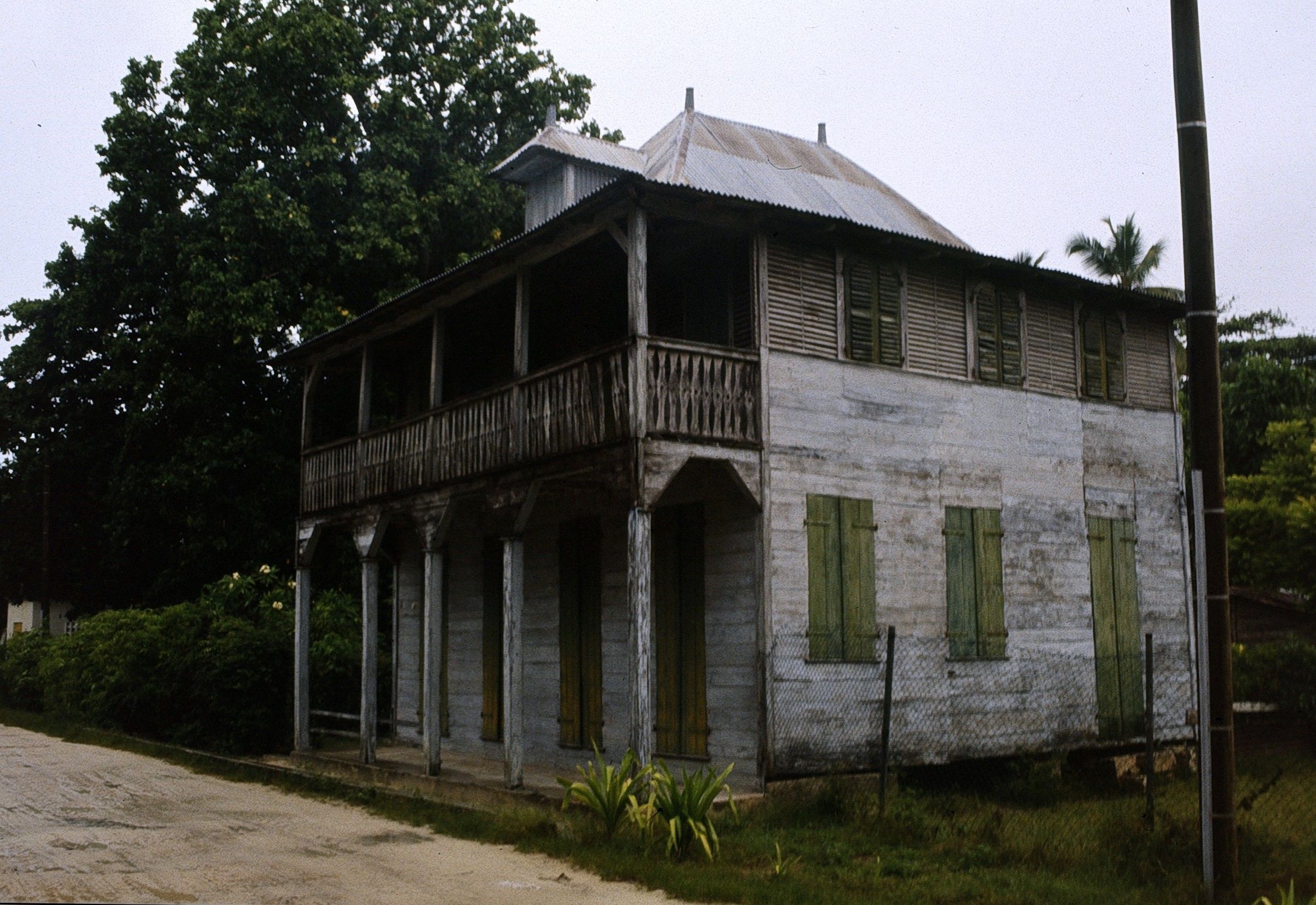
A long long time ago when I was living in paradise, where life was hard and beautiful, hard because money was tight and apart from lots of communal goodwill and a very well stocked public library, there was little in terms of the service and the commodities we, living in consumerism, take for granted, took for granted even back then, and beautiful because of the colours, smells, sights, feels of the rain forest, the Indian ocean, the fruit on the trees around our little tin-roofed house, the slowly meandering tortoises in the yards and the call of the flying foxes in the night,  I found myself on one of these morning digging my bare toes into the fine coral sand of a path coming down from the old wooden house behind me, the sea lapping a short distance in front of me, a tree lined road to my left and a group of massive coco-de-mer palm trees to my right.

I was waiting for a bus and without a timetable this always involved a degree of luck or long stretches of contemplation and discovery. Often, I would take off my shoes and trace complicated patterns into the sand with my toes. Occasionally, people would join me waiting, always impeccably dressed, smiling at my bare feet and greeting me shyly. 

I could hear the birds in the trees to my left, the rooster from the house behind me, a group of children playing in the surf in front of me and the wind swishing through the palm fronds to my right.

A few weeks earlier I had met an Irish nun. I didn't know she was a nun, we met at the hospital where I had been visiting a sick neighbour for a while, she was a nurse. Hearing her Irish accent, we got talking and often shared a cup of tea and stories of fun and grief and loss, as you do when you find yourself in company with a strangely familiar voice or face in a place far from home. And one day she told me about her daily prayer, said she wanted me to say it with her. Now, my inner arrogant voice initially cringed and my smile was forced. But in the end she smiled back and said, that wasn't too difficult, dear, wasn't it?

May it be beautiful below me. May it be beautiful above me. May it be beautiful to the right of me. May it be beautiful to the left of me. May it be beautiful behind me. May it be beautiful in front of me. May it be beautiful around me. I am restored in beauty.

I know now that it's her version of the Navajo prayer but at the time, there was no internet to inform me. I just called it the nun's prayer and I have been whispering it on many occasions ever since, whenever, wherever I have been waiting, for a bus, a train, a medical appointment, a drip to empty itself into my veins, a delayed visitor to arrive, a sleepless night to end, a day to begin. It always brings me back to a place, which is not the exact place of the day, but a conglomeration of places from paradise where at the time, I have often stood and waited.


A few days ago, I was listening to a podcast with psychologist Dacher Keltner speaking about his research on awe and the vagus nerve and how science can show (via cortisol/stress hormone levels, functional MRI imaging etc.) the way experiences of awe influence our emotional state and the first thing that came to mind was this memory, of these places, of the Irish nun's prayer, the heat of that morning, the sounds, the feeling of sand between my toes. 

If I should put into words the feeling that I experience when I remember that exact moment and the way the nun's prayer is connected to it, my first response would always be awe. And this despite the fact that it's neither outstanding scenic beauty, nor drama, nor religious or transformative event, but memories of a fairly ordinary daily experience some 30 years ago.

To listen to the podcast click here. To read about the research in a long interview, click here. If you need to see scientific publications on the subject, click here.

And BTW, you may have heard of the story where a father asked his daughter to stop using two words that drove him mad and before he could proceed, the daughter said, "Awesome Dad, what words, like, do you have in mind?"